

Crypto payment processors split into two fundamentally different categories: custodial services that take a customer's payment, convert it, and send you the proceeds later, and non-custodial setups like BTCPay Server that route bitcoin straight into a wallet you control from the first confirmation. The real distinction isn't the coin or the checkout button — it's whether a third party ever holds your money in between.
TL;DR:
- Custodial crypto payment processors sit between the buyer and you, converting and holding funds before settling to your bank account, usually for a percentage fee.
- Non-custodial processors like BTCPay Server send bitcoin directly into a wallet you hold the keys to, with no conversion step and no counterparty.
- The FATF Travel Rule and FinCEN's money-transmitter guidance apply to custodial processors, which is why they require ID from your customers; a self-hosted node on your own store generally doesn't.
- Bitcoin settles in about one confirmation and can't be reversed the way a card payment can, which erases chargeback fraud entirely once funds arrive on-chain.
- Running your own node means real sysadmin work — syncing, updates, backups, uptime — unless you pay someone to manage it for you.
Table of Contents
- What Crypto Payment Processors Actually Do With Your Money
- Custodial Processors: Who's Holding the Funds Between Sale and Settlement
- Non-Custodial Processors: Bitcoin Straight Into a Wallet You Hold
- Fees, Settlement Speed, and Who Carries the Risk
- Compliance: Why ID Shows Up at Checkout for One Model and Not the Other
- Choosing Between Custodial and Non-Custodial for Your Store
- Running Your Own Node: What BTCPay Server Actually Requires
- Accept Bitcoin Directly Into Your Own Wallet, Without Running the Server Yourself
- Frequently Asked Questions
- Sources
What Crypto Payment Processors Actually Do With Your Money
Every crypto payment processor performs the same basic job: a customer sends cryptocurrency at checkout, and that value eventually reaches you. What differs — enormously — is what happens in between those two moments. In a custodial setup, the processor receives the payment, often converts it to fiat immediately, holds it in its own accounts, and settles the proceeds to your bank a day or two later. In a non-custodial setup, the payment goes straight to an address generated from a wallet you alone control, with no intermediary account and no conversion step unless you choose one.
That gap — who holds the money between sale and settlement — is the entire story. It determines your fees, your exposure to a processor freezing or losing funds, whether your customers get asked for ID, and how fast you can actually spend what you earned.
Custodial Processors: Who's Holding the Funds Between Sale and Settlement

A custodial processor is, legally and functionally, a money services business. It takes in cryptocurrency, often converts it to dollars or euros within seconds to shield the merchant from price swings, and reports a clean fiat total to your dashboard. FinCEN's guidance on convertible virtual currencies treats administrators and exchangers of this kind as money transmitters under the Bank Secrecy Act, which means registration, an anti-money-laundering program, and recordkeeping — costs that get built into the fee you're charged, typically around 1% of each transaction.
That fee buys convenience: instant fiat conversion, a familiar dashboard, and no need to touch a crypto wallet yourself. It also means the processor can freeze your payout, delay settlement, or close your account for a policy violation you may not have been told about in advance — the same platform risk that comes with any payment intermediary, crypto or not. If the processor is compromised or insolvent while holding your converted funds, that risk is yours, not just theirs.
Non-Custodial Processors: Bitcoin Straight Into a Wallet You Hold

A non-custodial processor never takes possession of the money. The most widely used example is BTCPay Server, an open-source, self-hosted payment gateway that generates a unique bitcoin address for every invoice and watches the blockchain directly for payment — no company account sits in the middle. When a customer pays, the bitcoin moves from their wallet to yours in one transaction. There's no conversion, no settlement delay measured in business days, and no percentage taken by the software itself, because there's no company collecting a cut on volume.
This is closer to what cryptocurrency was built to do in the first place. The original Bitcoin whitepaper described a system for "electronic cash" that lets two parties transact "without the need for a trusted third party" — a non-custodial processor is simply that design applied to a checkout page instead of a wallet-to-wallet transfer.
One confirmation. That's typically the entire wait between a customer's payment and bitcoin landing in a wallet only you control, when you run a non-custodial processor.
Fees, Settlement Speed, and Who Carries the Risk
Put side by side, the operational differences aren't subtle.
| Factor | Custodial processor | Non-custodial processor (e.g. BTCPay Server) |
|---|---|---|
| Who holds funds before you | The processor | No one — funds go to your wallet |
| Typical fee | ~1% per transaction | No protocol fee; network fee only |
| Settlement time | 1–2 business days to bank | One confirmation, ~10 minutes |
| Chargeback exposure | Low, but refund disputes still exist | None — bitcoin transactions don't reverse |
| Customer KYC required | Usually yes, above certain thresholds | No, on your own store |
| Platform freeze/closure risk | Yes | No — there's no account to close |
Chargeback protection is one of the most underrated advantages on either side of this table, but it applies fully only once bitcoin actually settles on-chain. Unlike a card payment, which a buyer's bank can reverse weeks later under network dispute rules, a confirmed bitcoin transaction is final. That single property eliminates an entire category of fraud that card-accepting merchants budget for every year.
Compliance: Why ID Shows Up at Checkout for One Model and Not the Other
The reason custodial processors ask customers for identification isn't arbitrary — it's regulatory. The FATF Travel Rule requires virtual asset service providers, a category that includes custodial crypto payment processors, to collect and share sender and beneficiary information on transfers above a set threshold, generally USD/EUR 1,000. Combined with FinCEN's money-transmitter classification in the U.S. and comparable licensing regimes elsewhere, this is why a custodial checkout often feels more like a bank transfer than a bitcoin payment.
A merchant running a self-hosted, non-custodial node is typically outside that framework, because they never take custody of anyone's funds and never act as an intermediary between two parties' assets — they're simply receiving payment for their own goods, the same as accepting cash or a check. That said, regulatory treatment varies by jurisdiction and by how a store handles conversion, so this isn't blanket legal advice; if you're uncertain, a local compliance attorney is worth the hour.
Choosing Between Custodial and Non-Custodial for Your Store
If your business needs immediate fiat for payroll or rent and you have zero appetite for holding bitcoin even briefly, a custodial processor's instant conversion solves a real problem, and the fee is the price of that certainty. But for a merchant who wants to actually hold the asset they're earning, avoid a percentage cut on every sale, and not be one policy change away from a frozen payout, non-custodial is the better default — it's the model that matches what cryptocurrency is for in the first place. Given the choice, that's the one worth building toward, even if it means tolerating some price volatility between sale and spend.
Pro Tip: If volatility is your actual concern rather than custody, don't solve it by handing your keys to a processor. Solve it by sweeping a fixed percentage of your BTCPay wallet to an exchange on a schedule you set — daily, weekly, whatever fits your cash flow — so you keep control of every sat until the exact moment you decide to convert it.
Running Your Own Node: What BTCPay Server Actually Requires
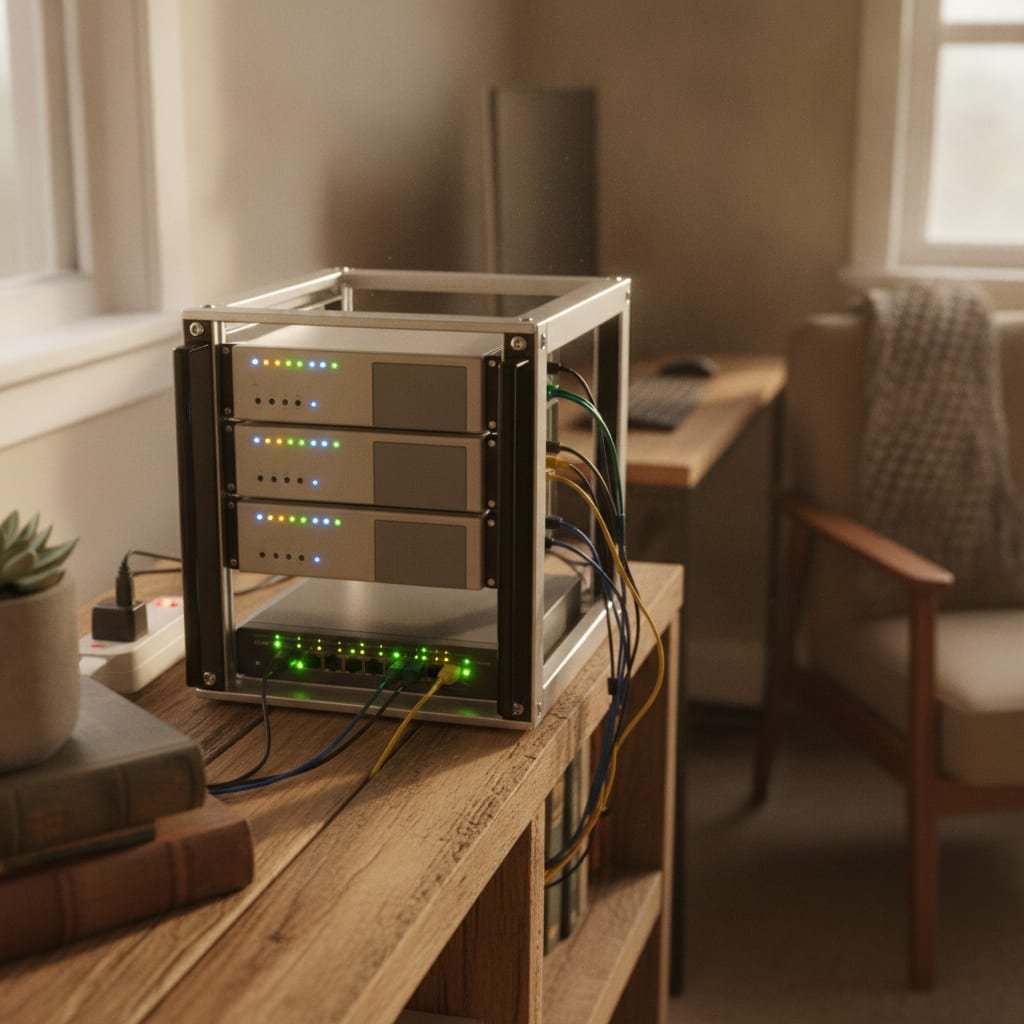
Self-hosting BTCPay Server means running a Bitcoin full node, which validates every transaction and block independently rather than trusting someone else's copy of the ledger. That node needs a server with several hundred gigabytes of storage and growing, a stable internet connection, and ongoing attention: software updates, wallet backups, and monitoring to catch the node falling out of sync before it affects a sale. None of this is exotic, but it's also not a weekend project for most merchants already busy running a store.
Accept Bitcoin Directly Into Your Own Wallet, Without Running the Server Yourself
This is the exact gap Myntli fills. For $29 a month, Myntli hosts a BTCPay Server instance on its own infrastructure and connects it to your store — WooCommerce, Shopify, Ghost, Magento, PrestaShop, Drupal Commerce, Invoice Ninja, or ReplaPay — so customers pay straight into a wallet only you hold the keys to. No percentage is taken, no custody changes hands, and there's no KYC requirement on your own checkout. For merchants who'd rather run everything on their own hardware, Myntli will install a full node on your server for a one-time $449, plus ongoing monitoring, updates, and sync maintenance either way.
The honest caveat: hosted or self-run, you still need a self-custody wallet to receive into, and Myntli will walk you through that setup if you don't have one yet — but the keys, and the responsibility for keeping them safe, stay with you. If that trade-off doesn't suit you, check the spec sheet before switching, because non-custodial means exactly what it says.
Frequently Asked Questions
What's the main difference between a custodial and non-custodial crypto payment processor?
A custodial processor receives and holds your customer's payment, often converting it to fiat before settling to your bank account later. A non-custodial processor, like BTCPay Server, sends the payment directly to a wallet you control, with no intermediary ever holding the funds.
Do non-custodial crypto payment processors require KYC from customers?
Generally no, because the merchant isn't acting as a money transmitter or intermediary between two parties' funds. Custodial processors typically do require identification above certain transaction thresholds under rules like the FATF Travel Rule.
Can a crypto payment I receive through a non-custodial processor be reversed?
No. Once a bitcoin transaction reaches enough confirmations on the network, it's final — there's no chargeback mechanism the way there is with card networks.
Is running my own BTCPay Server node difficult?
It requires a server with growing storage needs, a stable connection, and regular attention to updates, syncing, and backups. It's manageable but genuinely takes ongoing sysadmin work, which is why managed hosting exists for merchants who'd rather not do it themselves.
Why do custodial processors charge a percentage fee while non-custodial setups mostly don't?
Custodial processors are regulated money services businesses covering compliance, fraud monitoring, and instant fiat conversion costs, which gets priced into the percentage fee. Non-custodial software has no transaction-volume business model behind it, so you only pay the bitcoin network's own transaction fee.