

A flat monthly fee for bitcoin payments beats a percentage-based processor once your bitcoin sales pass a predictable break-even point: at $29 a month against a 1% cut, that point is $2,900 in monthly volume. The bigger difference is the architecture behind the price, not the number itself. Flat-fee setups usually run self-custodial software where the money goes straight to your wallet. Percentage processors usually hold your funds first and take their cut on the way through.
TL;DR:
- A $29 flat fee beats a 1% processor cut at $2,900 a month in bitcoin sales, and beats a 0.5% cut at $5,800.
- A flat fee covers the software and the server. Bitcoin network fees and any conversion to dollars are separate costs you still pay.
- Flat-fee pricing usually comes with self-custody: customers pay your wallet directly, and no third party holds or freezes your funds.
- Self-hosting for a one-time $449 install costs less over time, but you pay for the server and take responsibility for it.
- Below about $1,000 a month in bitcoin sales, a percentage processor can be cheaper. Above that, the math and the custody argument both favor a flat fee.
Table of Contents
- Flat Monthly Fee vs Percentage Cut: The Break-Even Math
- What a Flat Fee Buys You, and What It Leaves Out
- The Costs a Flat Fee Can't Remove: Network Fees and Conversion
- Hosted vs Self-Hosted: $29 a Month or $449 Once
- Custody and KYC: Why the Pricing Model Follows the Architecture
- Which Option We'd Pick at Each Sales Volume
- Get Bitcoin Payments for $29 a Month With No Cut of Your Sales
- Frequently Asked Questions
- Sources
Flat Monthly Fee vs Percentage Cut: The Break-Even Math

You can find the crossover point between flat and percentage pricing with one division: the monthly fee divided by the percentage rate. A $29 flat fee against a 1% processor breaks even at $2,900 of monthly bitcoin volume. Against a 0.5% processor, it breaks even at $5,800. Below that line, the percentage processor costs you less. Above it, every additional sale widens the gap in the flat fee's favor.
The table below shows the monthly cost of each model at different sales volumes. It covers processing fees only. Network fees and conversion costs are covered further down.
| Monthly bitcoin sales | 0.5% processor | 1% processor | $29 flat fee |
|---|---|---|---|
| $1,000 | $5 | $10 | $29 |
| $2,900 | $14.50 | $29 | $29 |
| $5,000 | $25 | $50 | $29 |
| $10,000 | $50 | $100 | $29 |
| $25,000 | $125 | $250 | $29 |
| $50,000 | $250 | $500 | $29 |
$2,900 a month. That's where a $29 flat fee and a 1% processor cut cost exactly the same, and every dollar above it is margin you keep.
Percentage pricing scales with your success, and flat pricing doesn't. A shop doing $50,000 a month in bitcoin sales pays a 1% processor $6,000 a year to move money that could have gone straight into its own wallet. The same shop pays $348 a year on a $29 plan.
The comparison is also worth running against cards. A typical online card rate is close to 3% plus a per-transaction charge. If even a modest share of your customers move from cards to bitcoin, the savings on those orders are larger than the processor comparison above suggests.
What a Flat Fee Buys You, and What It Leaves Out
A flat-fee bitcoin setup pays for infrastructure, not for a share of each transaction. In practice, the infrastructure is almost always BTCPay Server, the free, open-source payment processor that merchants run themselves. The software itself costs nothing and takes no fee. The hosting fee pays for the work of running it.
That work is real, and it's what you're paying to avoid:
- Keeping a node synced. BTCPay relies on a bitcoin full node to check payments against the blockchain. A node that falls behind can't confirm that an invoice was paid.
- Updates. BTCPay Server, the node software and their dependencies all release updates. A store that skips them falls behind on fixes.
- Monitoring. If the server goes down on a Saturday night, invoices stop generating. Someone has to notice and fix it.
- Shop integration. Connecting the payment node to WooCommerce, Shopify, Ghost or another platform means plugins, API keys and webhook configuration. If you're on Shopify, our walkthrough of how BTCPay Server connects to Shopify covers the specifics.
A flat fee does not cover the bitcoin network itself. It also doesn't pay anyone to convert your bitcoin into dollars or to give you tax advice. Those costs exist under any pricing model.
The Costs a Flat Fee Can't Remove: Network Fees and Conversion
Every on-chain bitcoin payment pays a miner fee, and no processor, flat or percentage, can make it disappear. Fees rise and fall with demand for block space. You can check current rates on mempool.space, which shows live fee estimates in satoshis per virtual byte.
On an incoming payment, the customer's wallet usually pays the miner fee, so it doesn't come out of your revenue. The fee lands on you later, when you spend or move the funds. Each invoice paid on-chain creates a separate coin in your wallet. When you consolidate fifty small payments into one transaction, you pay to include all fifty of them.
Pro Tip: Consolidate your small incoming payments when the mempool is quiet, often on weekends, rather than when you urgently need to move funds. A transaction with dozens of inputs can cost several times more during a fee spike than it would in a calm period. BTCPay's wallet lets you choose a fee rate when you send, so pick a low one and let the transaction wait.
The Lightning Network eases this for small orders. Lightning payments settle off-chain, so fees are typically a tiny fraction of on-chain costs. They also don't leave you holding dozens of small coins to consolidate later. If your average order is under about $50, enable Lightning.
Conversion is the other cost a flat fee can't remove. If you want dollars instead of bitcoin, you sell through an exchange, and that exchange sets its own fees and its own identity requirements. Some percentage processors bundle conversion into their cut. With a flat-fee, self-custodial setup, you choose when to convert, how much and where.
Hosted vs Self-Hosted: $29 a Month or $449 Once
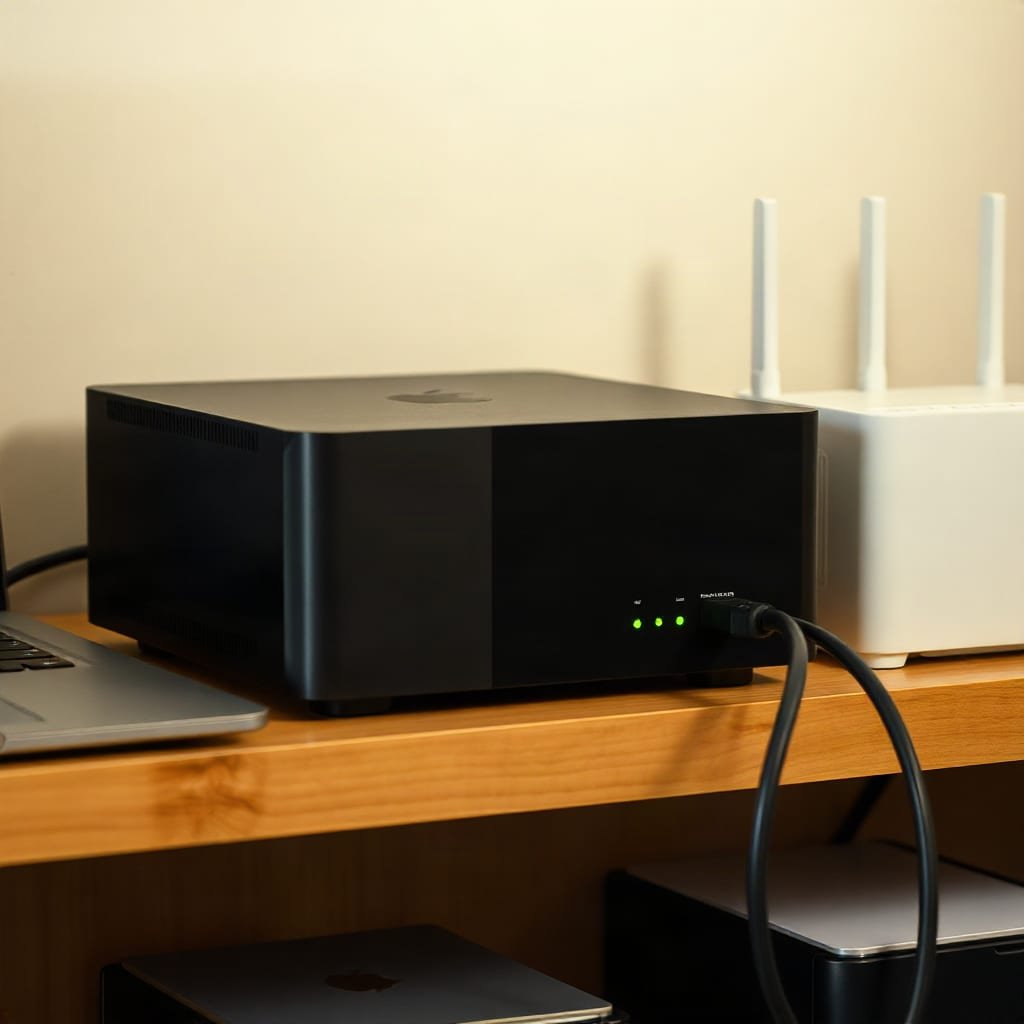
Within flat-fee pricing, the main decision is whether your store runs on someone else's node or on a server you control.
Hosted store on a managed node
Your BTCPay store runs on a node the provider maintains. You get a store, connect it to your shop and point it at your own wallet. There's no server to rent and nothing to update. Payments still go directly to your wallet, because BTCPay builds payment addresses from your public key and never holds your private keys.
The trade-off is that you depend on the provider's uptime and good faith for invoice generation. The provider can't spend your funds, but if its node goes offline, your checkout stops creating new invoices until it comes back.
Full node on your own server
The provider installs BTCPay and a full bitcoin node on a server you rent or own. That costs $449 once, plus your own server bill. You hold every key: the wallet keys and the root login to the machine.
The trade-off is responsibility. The blockchain takes up hundreds of gigabytes unless you prune it, so you'll need a server with enough storage. When the machine breaks, it's yours to fix or yours to pay someone to fix.
| Hosted ($29/month) | Self-hosted ($449 once) | |
|---|---|---|
| Year-one cost | $348 | $449 + server |
| Server responsibility | Provider | You |
| Funds custody | Your wallet | Your wallet |
| Who controls the node | Provider | You |
| Best for | Most small shops | Shops with technical staff or strict sovereignty needs |
Our recommendation for most merchants doing under $20,000 a month in bitcoin sales is the hosted option. You're paying to never think about the node, and at that volume your time is worth more than the server savings. Self-host when you have someone technical in-house, or when depending on any outside node is a dealbreaker for you.
Custody and KYC: Why the Pricing Model Follows the Architecture

Flat fees and percentage fees usually reflect two different ways of handling money. A percentage processor typically receives your customer's payment first, holds it, takes its cut and then pays you out. That's why it can charge a percentage: the money passes through its hands. A flat-fee host running self-custodial software never touches the funds, so it can only charge for the service.
That difference affects more than price. The Financial Action Task Force built its virtual asset guidance around service providers that transfer or safeguard assets on behalf of others. Custodial processors fall into that category, so they generally verify the identity of the merchants whose money they hold. They can also freeze balances, delay payouts or close accounts. Self-custodial software doesn't hold your funds, so the software itself has no account for anyone to freeze and no identity check to run on your store.
That isn't a loophole around your own obligations. Sales tax, income tax and any business rules in your jurisdiction still apply to you. What changes is that no third party sits between your customer and your wallet. Our breakdown of custodial vs non-custodial crypto payment processors covers the custody trade-offs in more depth.
The original Bitcoin whitepaper describes "a purely peer-to-peer version of electronic cash" that lets payments go "directly from one party to another without going through a financial institution." A custodial processor rebuilds the middleman that design was meant to remove. A flat-fee self-custodial setup doesn't.
Which Option We'd Pick at Each Sales Volume
The right choice depends on how much you sell in bitcoin and how much control you want over your funds.
- Under $1,000 a month in bitcoin. A percentage processor is cheaper on paper, by about $20 a month. If you're only testing whether customers want bitcoin, that's a reasonable place to start. Accept that you're trading custody for a small saving.
- $1,000 to $3,000 a month. The two models cost roughly the same. Pick the flat fee. For about the same money, you get funds that land in your own wallet and no payout schedule to wait on.
- $3,000 to $20,000 a month. The flat fee wins on cost and on control. A hosted node is the sensible default here.
- Over $20,000 a month, or with technical staff. Consider the one-time self-hosted install. The saving over a hosted plan is modest. Owning the whole stack is the real reason to choose it.
If you're still choosing a gateway at all, our guide to non-custodial crypto payment gateways walks through the full cost picture beyond the monthly fee.
Get Bitcoin Payments for $29 a Month With No Cut of Your Sales
Myntli runs BTCPay Server for you on a managed node for a flat $29 a month. We handle installation, sync, updates and monitoring, and we connect it to your WooCommerce, Shopify, Ghost, Magento, PrestaShop, Drupal Commerce, Invoice Ninja or ReplaPay store. Customers pay straight into your own wallet. We take no percentage, hold no funds and run no KYC on your store. If you don't have a self-custody wallet yet, we'll walk you through setting one up. If you'd rather own the whole stack, we'll install a full node on your own server for $449 once. API access is available for custom builds.
One honest caveat: a hosted store depends on our node being up to generate invoices. Your funds are never at risk, but your checkout is only as available as the node behind it. Miner fees and any conversion to dollars are still yours to manage. Read our spec sheet and compare before you commit.
Frequently Asked Questions
At what sales volume does a flat monthly fee beat a percentage fee for bitcoin payments?
Divide the monthly fee by the percentage rate. A $29 flat fee beats a 1% processor at $2,900 a month in bitcoin sales and beats a 0.5% processor at $5,800. Above that point, every additional sale widens the savings.
Does a flat monthly fee cover bitcoin network fees?
No. Miner fees are paid to the bitcoin network, not to your payment host, and no pricing model removes them. Customers usually pay the fee on incoming payments, while you pay it when you consolidate or move funds.
Is BTCPay Server free?
Yes. BTCPay Server is free, open-source software that takes no transaction fee. A flat monthly fee pays a host to run, sync, update and monitor it for you, which saves you from managing the server yourself.
Can a flat-fee bitcoin host freeze my funds?
Not with a self-custodial setup like BTCPay Server. Payments go directly to a wallet you control, and the host never holds your private keys. The host can affect whether new invoices are generated, but it can't touch money already in your wallet.
Should I choose a hosted node or self-host my own?
For most shops doing under about $20,000 a month in bitcoin sales, a hosted node is the better choice because it removes all server work. Self-host when you have technical staff or need full control of the node. Remember that self-hosting adds your own server costs and upkeep.
Sources
- BTCPay Server | BTCPay Server Foundation
- Bitcoin: A Peer-to-Peer Electronic Cash System | bitcoin.org
- Mempool fee estimates | mempool.space
- Lightning Network | Lightning Network
- Virtual assets guidance | Financial Action Task Force